
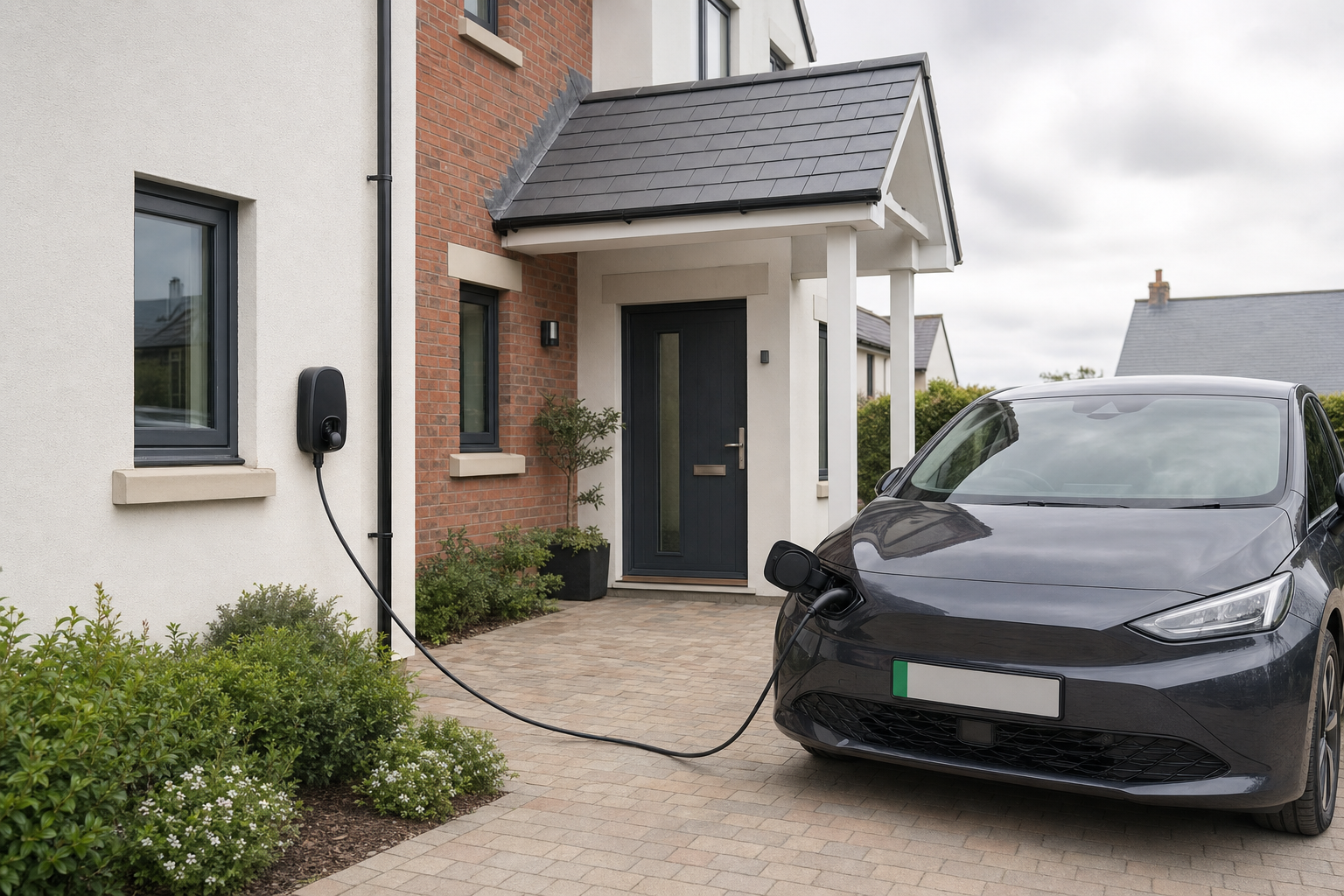
What to consider before installing an EV charger
Built around where you park
Cable route, charger position and vehicle use are checked before anything is fixed.
Smart where it needs to be
Charging rate, controls and load management are chosen to suit the property.
Clear setup on the day
Commissioning and a practical run through are included once the charger is live.
Benefits of installing a dedicated EV charging point
Charging from a standard socket is slow, clumsy and not a long-term answer for most electric vehicles. A dedicated charger gives you a fixed point, proper electrical protection and a setup built for regular use at home or at work. We install chargers by checking the incoming supply, spare capacity, cable route and where the vehicle will actually be parked. Charger type matters too, from tethered or untethered units to the charging rate and any smart controls. When you choose Natural Spark Ltd, the installation is planned around your vehicle, your property and your everyday routine, not just the nearest wall to the driveway.
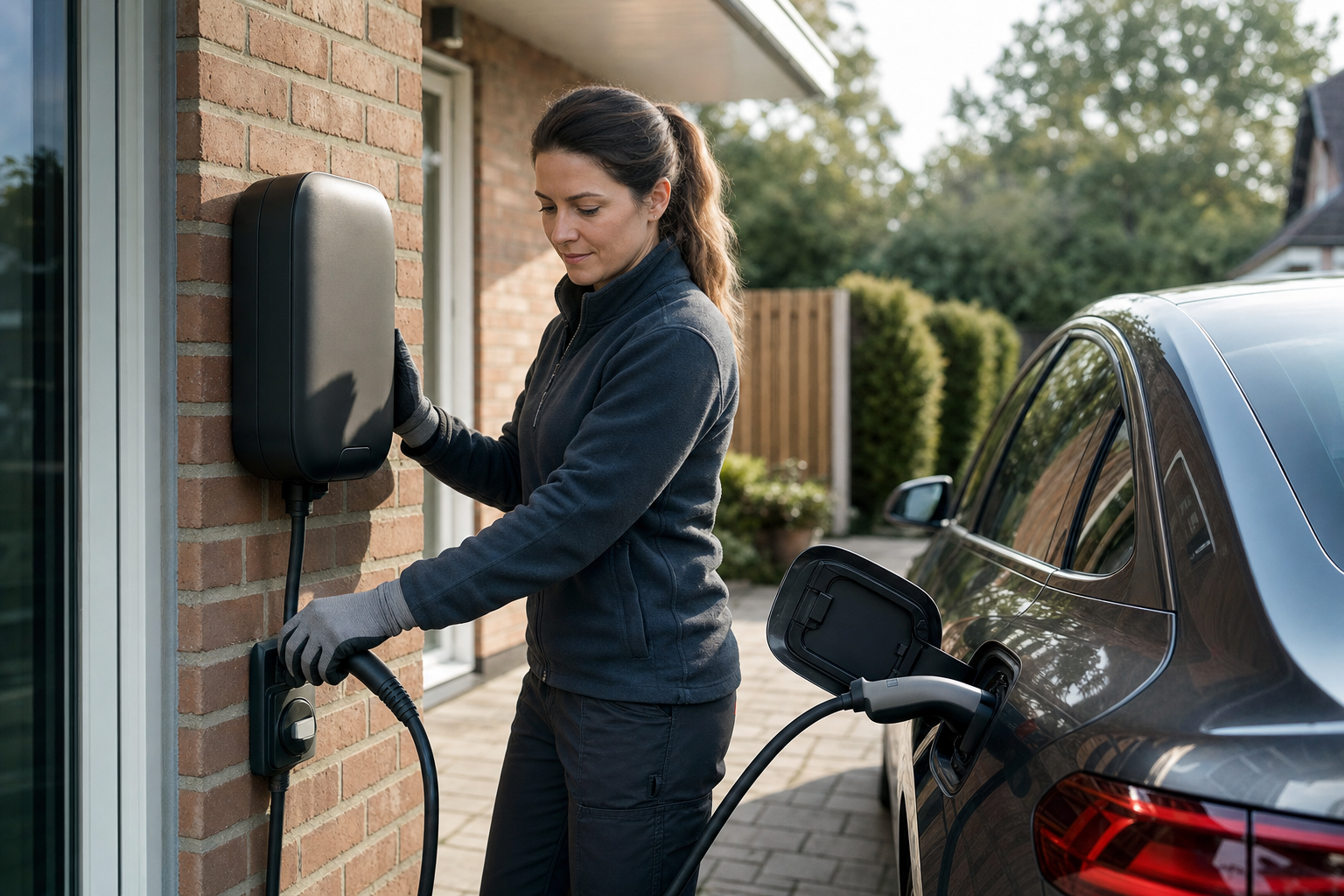

EV charger supply checks, smart controls and setup
Some properties can take vehicle charging quite easily. Others need a closer look at demand, especially where other high-load equipment is already in use. That is where load management can help balance charging with the rest of the installation. With Natural Spark Ltd, mounting position, protection, commissioning and demonstration are all part of the job, so you are not left staring at lights on a screen and hoping for the best. If the charger is part of a wider energy plan, we can also consider how it fits alongside solar PV or battery storage.
Frequently asked questions
Why is a dedicated charger better than a socket?
A dedicated charger is designed for regular vehicle charging, with the right protection, a fixed position and a charging rate that is usually far more practical than a standard socket. It also gives you a neater everyday setup. For most drivers, it turns charging into a routine rather than a workaround.
Can the charger go some distance from the consumer unit?
Sometimes, yes, but the route, cable length and installation method all need checking first. The best position is not always the shortest run, because parking layout matters too. We look at where the vehicle sits, how the cable can be routed safely and whether the supply can support that arrangement properly.
Do I need load management for EV charging?
Not every property needs it, but it can be useful where charging sits alongside other heavy electrical demand. Load management helps balance the charger with the rest of the installation so vehicle charging does not put unnecessary strain on the supply. Whether it is needed depends on capacity and how the property is used.